My Friends for Life News

Wednesday, July 18, 2007

Cheer on the team in Berkley on August 4th , 2007

On Saturday August 4th 2007, over 60 PMC riders will be pedaling to raise money for neuroblastoma research at Dana Farber. We have organized a special rest stop in Berkley, MA along the 90 miles trek. Come and cheer them on. Here are the details.

Friends for Life Rest Stop

This will be our thirs annual Friends for Life cheering section, mid-ride party at the Lion’s club in Berkley along the PMC bike route.
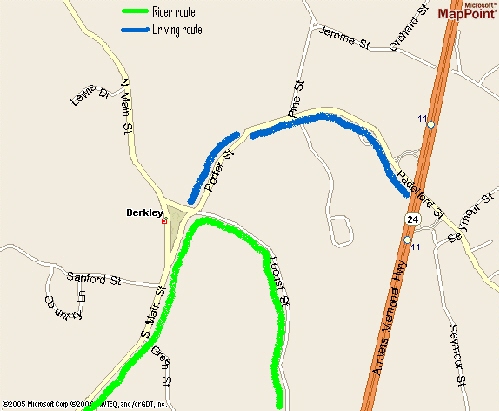


The club is located on the Berkley common, which is the triangle in the center of the above map.

For PMC riders, it is less than 10 miles after the Dighton lunch stop.

It comes equipped with a small kitchen, “real bathrooms”, a playground for the kids, nice shade trees for the cheering section and an indoor hall in case of rain!

We have a team of volunteers that will make it the “Best” and most desirable place to stop to meet your family and friends along the route and have lunch and a rest before moving on to Bourne. We encourage team riders to shorten or skip the Dighton lunch stop in order to spend time at the team stop with the friends and family and children that bring us all together to ride for this cause.

There will be plenty of food and drinks for all with the “Franwich” making a come back by popular demand. There will be lots of interesting things to do for the kids while they wait for the riders (playground, games, music, face painting, crafts, magic, lemonade stand. etc). Best of all there will be plenty of Friends to enjoy the day with.

If you or your friends and family want to help with set up please contact Gail Riley at 781-686-0434 or gyriley@comcast.net. Also contact Gail if you would like to provide food and/or drink at the stop. We will need baked goods, treats, fruit, drinks – anything you think tired bikers would like.

We expect that most riders will be at the stop between 11:00am and 2pm.

Please help us get the word out to everyone who would like to come and cheer on the team. Tell all your friends to come meet the kids we pedal for and their families. People should bring chairs and/or blankets to sit on. There are a number of trees and plenty of shade for people to just relax and enjoy the event.

Driving directions:

Take Route 128 or I-495 to Route 24 south.
Take exit 11. Padelford St, Berkley, Dighton.
Turn right (west) onto Padelford St.
Proceed one mile until you come to Locust St.
After you go straight across Locust St, the common and Friends For Life waterstop will be on your right. There is parking around the Old Town Hall building as well as near the playground.

Berkley is 40 miles south of Boston.

Any online map search for “Berkley, MA” will bring you right to the town common.
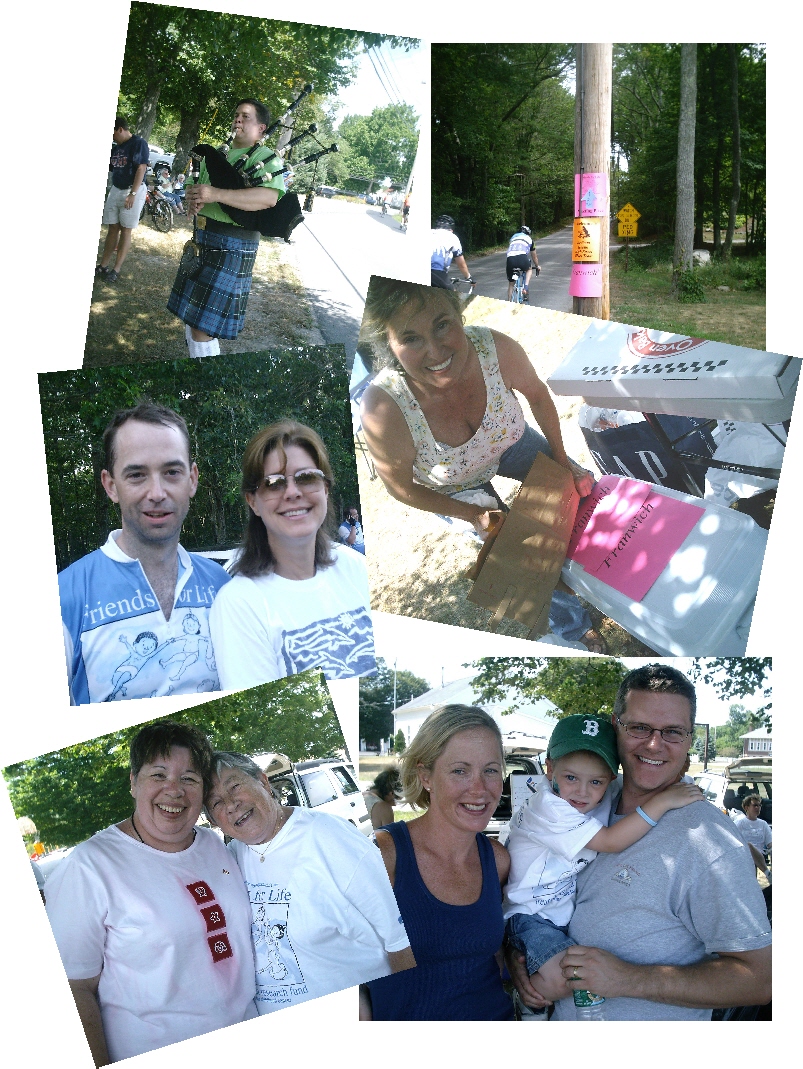
Wednesday, June 06, 2007

Rodeo to raise money for Neurobalstoma research JUne 23/24

Dear Friends,
Please join us at a very fun event on June 23rd or 24th!!! A former colleague of mine from Eaton Vance (a Texan) is holding a rodeo with proceeds going to Neuroblastoma. We will be taking the kids on Sunday the 24th and would love for you to be there as well!! How many chances to you get to take your children to a rodeo, see cowboys on horseback and support pediatric cancer all at one time? The rodeo will be held in Spencer Ma - near Worcester and you can call to get tickets or buy them at the door.

To find out more info about the work of the Spirit of the American Cowboy Foundation , please visit www.CowboySpirit.org.

Barb Emery

Join the Friends for Life PMC team on August 4th

In 2006, many friends pedaled their bikes in the Pan Mass Challenge (PMC) -- a bike-a-thon across Massachusetts that raises money for Dana Farber Cancer Institute -- and raised over $688,000.00 to support neuroblastoma cancer research.

Neuroblastoma is a solid tumor, which arises either in the sympathetic nervous system or closely associated adrenal glands and is usually, although not always located in the abdomen. It ususally strikes children under the age of 2. Because the symptoms of the disease tend to be varied and vague, some 65% of neuroblastomas are not diagnosed until the disease is widespread. Despite intensive courses of chemotherapy, radiation, surgery and stem cell transplant and often initial success in treating the disease, it often relapses, making this one of the most lethal of all childhood cancers. Working together we intend to change these terrible facts.

Several families and friends whose children are afflicted with Neuroblastoma have joined forces to establish the "Friends for Life" Neuroblastoma Endowed Fellowship at Dana-Farber (account PD5100). This fellowship enables Dana Farber to hire researchers, for perpetuity, working hard to find more effective treatments and relapse protocol and to help eradicate this aggresive pediatric cancer.

We have created a PMC team named "Friends for Life". All the proceeds of the team is directed into the "Friends for Life" Neuroblastoma Endowed Fellowship (account PD5100)at Dana Farber.

Please join us, and ride the 2007 PMC as a "Friend for Life".

To join the "Friends for Life" team send an email to the team captain, Bruce Greer, with your PMC Egift ID.
bruce.greer@verizon.net
If you have not yet registered for the 2007 PMC, go to www.pmc.org. Upon registration, you will be given an Egift ID.

Or if you want to direct your PMC fundraising without joining the team contact Denyse Dodd at 617-872-6020 or email her at denysed@myfriendsforlife.com

As a member of the "Friends for Life" team you will receive an invitation to the Friends for Life Berkley rest stop on Saturday August 4th to sample a Franwich. 100% of the money raised will go directly to Dana Farber and help to fund the cure that is needed to save our children.

Wednesday, May 02, 2007

Cruise for a Cure -- A motorcycle ride for Dr. FOlkman's NB research

Cruise for a Cure
In Memory of Shawn Langley


When: Saturday, May 12, 2007
Sign in 9:00 am Ride starts at 10:00am

Donation: $25.00 to ride
-Proceeds will benefit Dr. Folkman’s Neuroblastoma Project at Children’s Hospital in Boston, Massachusetts.

Where: Merrimack, NH to Medway, MA

Contact: Bill Werner at Cruise4Cure@yahoo.com or (603) 521-5183.

For more information on Neuroblastoma: www.myfriendsforlife.com
To register and for information on donating: www.myspace.com/Cruise4Cure

Wednesday, June 14, 2006

Looking for Runners in the BAA 1/2 marathon

The B.A.A. Half Marathon presented by Dana-Farber Cancer Institute and the Jimmy Fund
is taking place on Sunday, October 8, 2006 -- Park Drive, Back Bay Fens, Boston.

The "Friends for Life" is currently building a team of runners to particiapte in the event and help raise money to benefit the "Friends for Life" neuroblastoma fund at Dana Farber (PD5100).

Each runner is responsible for raising a mininum of $500 and the team as a whole most raise at least $10,000 for the funds to be restricted to the PD5100 account.

Send email to denysed@myfriendsforlife.com if you want to be part of the Friends for Life team and help the kids.

Click here to register with the Dana Farber 1/2 marathon team and then make sure you send Denyse an email telling her you want to run for Friends for LIfe.

Saturday, June 03, 2006

Join the "Friends for Life" walk team 2006

On September 17th, 2006 we will once again lace up our walking shoes
and gather as the "Friends for Life" walk team in the 2006
Boston Marathon Jimmy Fund Walk (aka the Hero Walk).

All the money we raise as a team will be directed to the "Friends for Life"
neuroblastoma endowed fellowship (PD5100) at Dana Farber. This fellowship helps to support full time researchers at Dana Farber to find more effective treatments and relapse protocol for neuroblastoma, a deadly childhood cancer.

Neuroblastoma is a solid tumor, which arises either in the sympathetic nervous system or closely associated adrenal glands and is usually, although not always located in the abdomen. It ususally strikes children under the age of 2. Because the symptoms of the disease tend to be varied and vague, some 65% of neuroblastomas are not diagnosed until the disease is widespread. Despite intensive courses of chemotherapy, radiation, surgery and stem cell transplant and often initial success in treating the disease, it often relapses, making this one of the most lethal of all childhood cancers. Walking together we intend to change these terrible facts.


Choose the route that works for you and come walk with us. Be a Hero.

Join us for the full marathon -- 26 miles if you dare...
The 1/2 marathon -- 13 miles from Wellesley.
Or do the family walk -- 3 miles starting at the Jimmy Fund and ending
in Copley Square.

Click here to goto the Jimmy Fund Walk site and register to walk with the "Friends for Life" team.

If you can't walk please consider making a donation to our team by clicking here.

For more information about the "Friends for Life" walk team please email
the team captain, Denyse Dodd at denysed@myfriendsforlife.com or call 617-872-6020

Tuesday, May 16, 2006

Path of Progress -- A Dana Farber progress report on Neuroblastoma Research

Spring/Summer 2006 PATHS OF PROGRESS - A Dana Farber Publication.

Neuroblastoma's Foes - Researchers seek better, safer treatment for a rare childhood cancer.

By Richard Saltus


Almost always, when a mother takes her feverish and lethargic toddler to the pediatrician, it turns out to be nothing more serious than a common childhood virus. So Dana McCreesh of Southport, Conn., wasn’t overly worried about her 2-year-old son, Brent,
when routine blood tests came back abnormal and the doctor referred them to a large teaching hospital 45 minutes away.

It was Sept. 13, 2004. “We had a great life going, and no one in our family had ever been really sick,” recalls McCreesh. “At first, I didn’t even bother to call my husband, who was at work.” But the McCreeshes’ “great life” disintegrated when, after several hours of tests including ultrasound and CT imaging, two grim looking physicians at Yale-New Haven Medical Center broke the news to McCreesh and her husband, Mike, who had just arrived. “Your son has Stage IV neuroblastoma,” the doctors informed them. It was a disease that Dana and Mike McCreesh had never heard of, and not surprisingly, as only 600-800 new cases are recorded each year in the United States. Neuroblastoma is a solid tumor of infants and children that starts in nervous system tissue, often in the adrenal glands inside the abdomen. Some infants are born with the cancer, which forms when cells called neuroblastoma fail to mature into nerve cells but instead remain undifferentiated and divide uncontrollably to form tumors. Most cases are diagnosed in children under age 5. About 50 percent of neuroblastomas occur in a fast growing, aggressive form that spreads to lymph nodes and other organs before causing symptoms that lead to diagnosis. Though some types are easily cured with surgery, nationally only about one third of the highest-risk patients survive long term. Hit with this bombshell, the McCreeshes simply refused to believe the doctors’ verdict. “I was sure that after more tests, they’d say it was a mistake,” Dana McCreesh recalls. A biopsy (tissue removal and exam) of Brent’s multiple tumors, however, stripped away that last hope. From that moment forward, the life of the McCreesh family would be consumed by the disease and its complicated care, both in the hospital and at home. They also have a daughter, Madison, 15 months older than Brent, and Dana was pregnant with another daughter, Kira, at the time.

Team of specialists
Patients with advanced neuroblastoma require expert, specialized treatment with surgery, chemotherapy, radiation, and blood ste cell transplants. In New England, a joint Dana-Farber/Children’s Hospital Boston (DF/CHB) team cares for an average of 20 to 30 neuroblastoma patients at any given time, most of them participants in clinical trials of new drug combinations and novel anticancer agents.

Suzanne Shusterman, MD, got hooked on neuroblastoma care and research during a fellowship at Children’s Hospital of Philadelphia, and joined the Dana-Farber staff tocontinue working on it.

“This work is incredibly rewarding. You help people through the worst times of their life, and a lot of kids are now happy and active and thriving.”
— Suzanne Shusterman, MD

Lisa Diller, MD, of Dana-Farber, who heads the multidisciplinary program, says the past year has seen a surge of activity. A new physician-researcher who focuses on neuroblastoma, Suzanne Shusterman, MD, has joined the program, and several new clinical trials havebegun or are being planned. “We also were approved to open a study on survivors,” says Diller. “An increasing number of kids are surviving neuroblastoma, and we want to look at what’s happening in terms of their growth, hormonal development, bone health, and other concerns.” Shusterman, formerly of Children’s Hospital of Philadelphia, came to Boston thanks to a fellowship endowed by Friends for Life, a fundraising organization founded by Michael and Denyse Dodd, whose daughter, Isabelle, was successfully treated for neuroblastoma through Dana-Farber/Children’s Hospital Cancer Care. Neuroblastoma, according to Shusterman, “scientifically is a curious disease because it has different biological forms. Half the patients will do well with just surgery to remove the tumors. The other half have very aggressive disease, and many of them are not cured with current treatments.” She’s studying new approaches for those patients who relapse after their initially successful treatment.

In some cases, it is a blessing of sorts when neuroblastoma causes severe symptoms early on. Kane Goodman of Andover, Mass., was only three months old when his mother insisted on a series of tests to find the cause of his constant crying and leg weakness. Tracy Goodman says she persisted, even though doctors could find nothing wrong and speculated that he had acid reflux. Finally, a neurologist ordered imaging tests in February 2003 that revealed a neuroblastoma tumor woven around his spinal cord and compressing it, causing the leg weakness that quickly progressed to total paralysis. Surgeons removed the tumor, and Kane underwent chemotherapy because some of the cancer cells remained, but today he’s been cancer-free for nearly three years and is considered a childhood cancer survivor. “The paralysis saved his life,” says his mother, though the toddler has yet to recover completely from the spinal cord damage. He wears braces on his legs and uses a wheelchair to get around; he’s also mastering the use of a walker. “Day to day I worry less about his cancer coming back.”

Doubling the effect

As in about half of neuroblastoma patients, Brent McCreesh’s cancer caused no diagnosable symptoms until it had spread to several organs and his bone marrow. The doctors at Yale-New Haven moved quickly. They implanted in his chest a flexible rubber catheter, which for the next year would serve as a port for medications, fluids, and blood transfusions, as well as easy access for blood samples. The opening salvo of treatment was six rounds of combination chemotherapy to shrink the tumors before they were removed during three long operations by Robert Shamberger, MD, at Children’s Hospital Boston. Back at Yale, Brent underwent 14 days of radiation therapy. Next, the Children’s team prepared the coup de grace. Brent received a blast of high-dose chemotherapy designed to mop up any surviving cancer cells, and then had an infusion of his own blood stem cells (previously removed and stored) to rebuild his bone marrow. A few weeks later, the chemotherapy and stem cell transplant treatment was repeated, this time accompanied by total-body radiation. At many U.S. cancer centers, Brent would have received a single stem cell transplant. But the Dana- Farber/Children’s Hospital Cancer Care team has been pushing the treatment envelope for several years by adding a second transplant after an additional round of chemotherapy and radiation. Overall, the “very, very aggressive” double transplant treatment has upped the long-term survival rate to about 50 percent, says Diller. One child died during therapy, highlighting the tightrope that doctors are walking with current treatments for high-risk neuroblastoma patients. “We are at our limit with conventional chemotherapy, surgery, and radiation,” she says. “Fortunately, a lot of new agents are being developed for this disease.”

Tactics on trial

To make further gains, physicians will need to move beyond the brute force assault of toxic drugs and radiation, turning to newer weapons that are more specific and less harmful to the body.

Advancing this line of research is where Shusterman puts much of her time
and energy. When she joined the Dana-Farber/Children’s neuroblastoma
program, she also became the principal investigator in Boston for NANT – New Approaches in Neuroblastoma Therapy – a collaboration of 14 universities and children’s medical centers carrying out clinical trials of a variety of agents. One of the promising avenues being tested is shrinking tumors by choking off their blood supply with antiangiogenesis agents. Two such drugs, temozolomide and thalidomide,
have been used in neuroblastoma, and the new angiogenesis inhibitor Avastin is under consideration for testing. A different type of drug, topotecan, prevents breaks in
cancer cells’ DNA from being repaired, thereby causing the cells to die. It has proved surprisingly effective in relapsed neuroblastoma, and a trial of the drug as a first-line treatment in newly diagnosed patients is being planned. Another line of attack uses a targeted “search-and-destroy” strategy to deliver radiation directly to neuroblastoma cells. For example, a drug called MIBG is preferentially taken up by neuroblastoma tissue, and four medical centers in the United States are treating the tumors by linking radioactive iodine to MIBG, carrying targeted radiation to the neuroblastoma.

The treatment has few toxic side effects and in some studies has shrunk advanced tumors in 40 percent of relapsed patients. “These are very good results,” says Shusterman, adding that more than three quarters of patients get significant pain relief. She says she hopes the Dana-Farber/Children’s program can begin offering the therapy this fall after construction of a special lead lined treatment room. Yet another “smart” weapon is an antibody called Hu14.18-IL2 that affixes to neuroblastoma cells and signals the patient’s immune system to combat the cancer. A trial of this therapy has recently opened here. And one of the collaborative NANT studies is using cyclophosphamide, a chemotherapy agent, given in almost-constant small doses along with Zometa (zoledronic acid), an antiangiogenic drug that may help prevent a cancer from metastasizing (spreading) to the patient’s bones.

A promising future

In September 2005, Brent McCreesh was declared free of cancer. He celebrated Christmas among 12 cousins and other extended family members from whom he’d
been virtually cut off; during the chemotherapy and transplants, Brent wasn’t allowed to be indoors with other children for 16 months, for fear of infection. In saving his life, the extremely intense treatments have taken a toll on Brent. He is short – likely to reach a little over 5 feet – and he will be infertile; he also has some hearing loss. Despite the repeated chemo and whole-body radiation that can affect brain function, Brent has shown no signs of learning disabilities. In fact, his intelligence is above normal, a surprising observation in many neuroblastoma transplant survivors that hasn’t been explained, notes Diller. “Brent is amazing,” says Dana McCreesh. “He’s happy; he’s at nursery school and having play dates.” So far, so good. But the McCreeshes are holding their breath: Until three years have passed since Brent’s transplants, there’s a 50-50 chance of a recurrence. “We hope he enters permanent remission in June 2008,” his mother adds.

Despite the daunting prognosis for a large segment of patients, says Shusterman, “This work is incredibly rewarding. You help people through the worst times of their life, and a lot of kids are now happy and active and thriving.”

Fish and (gene) chips


Neuroblastoma strikes the very young, not out of some malevolent biological design, but because of genetic damage to the immature nervous system. About 40 percent of neuroblastomas begin before birth, making it the most common cancer in newborns.
In addition to conducting research directly involving patients, Dana-Farber scientists are using powerful new biomedical tools to unravel the roots of neuroblastoma and search for drugs. For example, pediatric oncologists Kimberly Stegmaier, MD, and Todd Golub, MD, of Dana-Farber and the Broad Institute of the Massachusetts Institute of Technology and Harvard University have devised a method of rapidly testing thousands of chemicals and drugs against rare cancers such as neuroblastoma.
The novel strategy uses microarrays (“gene chips”) to identify compounds that cause a favorable change in the genetic activity, or “signature,” of cancer cells.
“Neuroblastoma arises from immature neural crest cells that have both an inability to mature and an abnormal capacity to proliferate,” Stegmaier says. Although researchers have not yet found the molecular targets that cause these cells to differentiate, or specialize – thereby halting the cancerous proliferation – the large-scale testing method can identify compounds that may alter a cancer cell’s gene activity to resemble that of a mature cell. “Such a drug might be effective in treating the cancer,” she says. On another front, Thomas Look, MD, of Dana-Farber
and Children’s Hospital Boston and his colleagues are investigating the genetics of nervous system development in the zebrafish, a small, brightly-striped and nearly
transparent animal that reproduces rapidly and which, literally, provides a window on the formation of internal organs and systems. Jeong-Soo Lee, PhD, a postdoctoral fellow in Look’s lab, is creating a zebrafish equivalent of neuroblastoma for genetic research and for testing potential treatments.

His strategy in the project, which is supported by a gift from the Durand family, is to insert into zebrafish embryos a cancer-causing oncogene, MYCN, that drives
the most aggressive and hard-to-treat form of neuroblastoma in humans. Lee is devising a way to activate the gene at the appropriate time so the fish develop neuroblastoma but don’t die before they can be studied. Other investigators are hunting genes involved in embryonic growth of the nervous system. “Some of these genes have already been identified, and we’re looking for mutations among neuroblastoma patient samples,” says Dana-Farber postdoctoral fellow Rodney Stewart, PhD. Colleague Rani George, MD, PhD, is using a cutting-edge technique for finding small genetic alterations, called single nucleotide polymorphisms, that might reveal mutations in molecules that regulate nerve cell growth.

Look’s lab also runs tests on most of the neuroblastoma tumors taken from patients in the United States and Australia, to help determine whether these individuals
are at low, intermediate, or high risk of cancer recurrence. The results can guide physicians toward the best treatments, says Lisa Moreau, supervisor of the DFCI Neuroblastoma Reference Library. – R.S.

Wednesday, March 22, 2006

Join the Friends for Life PMC team on August 5th 2006

In 2005, many friends pedaled their bikes in the Pan Mass Challenge (PMC) -- a bike-a-thon across Massachusetts that raises money for Dana Farber Cancer Institute -- and raised over $390,000.00 to support neuroblastoma cancer research.

Neuroblastoma is a solid tumor, which arises either in the sympathetic nervous system or closely associated adrenal glands and is usually, although not always located in the abdomen. It ususally strikes children under the age of 2. Because the symptoms of the disease tend to be varied and vague, some 65% of neuroblastomas are not diagnosed until the disease is widespread. Despite intensive courses of chemotherapy, radiation, surgery and stem cell transplant and often initial success in treating the disease, it often relapses, making this one of the most lethal of all childhood cancers. Working together we intend to change these terrible facts.

Several families and friends whose children are afflicted with Neuroblastoma have joined forces to establish the "Friends for Life" Neuroblastoma Endowed Fellowship at Dana-Farber (account PD5100). This fellowship enables Dana Farber to hire researchers, for perpetuity, working hard to find more effective treatments and relapse protocol and to help eradicate this aggresive pediatric cancer.

We have created a PMC team named "Friends for Life". All the proceeds of the team is directed into the "Friends for Life" Neuroblastoma Endowed Fellowship (account PD5100)at Dana Farber.

Please join us, and ride the 2006 PMC as a "Friend for Life".

To join the "Friends for Life" team send an email to the team captain, Bruce Greer, with your PMC Egift ID.
bgreer@myfriendsforlife.com
If you have not yet registered for the 2006 PMC, go to www.pmc.org. Upon registration, you will be given an Egift ID.

Or if you want to direct your PMC fundraising without joining the team contact Denyse Dodd at 617-872-6020 or email her at denysed@myfriendsforlife.com

As a member of the "Friends for Life" team you will receive a free custom riding jersey and an invitation to the Friends for Life Berkley rest stop on Saturday August 5th to sample a Franwich. 100% of the money raised will go directly to Dana Farber and help to fund the cure that is needed to save our children.

Tuesday, December 13, 2005

Status of Research supported by the Friends for Life at Children's Hospital Boston (Dr. Folkman) 11/2005

CHILDREN'S HOSPITAL
Surgeon-in-Chief, Emeritus
Director, Vascular Biology Program
HARVARD MEDICAL SCHOOL
Andrus Professor of Pediatric Surgery
Professor of Cell Biology

Judah Folkman, M.D.
Department of Surgery
Children's Hospital Boston
Karp Family Research Laboratories 12.129
Vascular Biology Program
300 Longwood Avenue
Boston, Massachusetts 02115-5737
(617) 919-2346
(617) 739-5891 (FAX)
judah.folkman@childrens.harvard.edu

November 18, 2005
BY TELEFACSIMILE

Michael Dodd, M.D.
Co-founder
Friends for Life


Dear Dr. Dodd:

I am very grateful to you and all of the parents of the Friends for Life who have contributed such generous support for research in neuroblastoma and in its early diagnosis by angiogenesis-based biomarkers.

We will begin immediately. Our plan is to establish a fund at Children's Hospital, which will be entitled, "Development of Angiogenesis-Based Biomarkers to Diagnose Early Recurrence of Neuroblastoma". The fund will be in the Vascular Biology Program at Children's Hospital.

We will work closely together with Dr. Lisa Diller and her colleagues (Dr.Suzanne Shusterman) at the Dana Farber Cancer Institute.

We will hire one post-doctoral fellow to work on this project full time.

The next step will be for us to apply to the internal review boards at Children's Hospital and the Dana Farber to obtain a urine sample (for metalloproteinase) and at a very small blood sample to measure the platelet enhancement proteome and well as the level of circulating bone-marrow derived endothelial cells.

We will also try to obtain these samples from children who are in the hospital for illnesses other than cancer.

Our goal will be to try to determine if it is possible to detect any tumor recurrence months or years before the tumor can be detected by any other method, including imaging methods or catecholamines. In fact, in catecholamine biomarker will be used as a comparison to the angiogenesis-based biomarkers because we know that some recurrence neuroblastomas stop making catecholamines.

If we can show that our angiogenesis-based biomarkers will rise steadily in a child whose tumor is recurring, but will remain at a normal level or a stable level in a patient whose tumor is not recurring, then we may go back to the internal review boards with a plan to treat the rising angiogenesis-based biomarker with relatively non-toxic angiogenesis inhibitors.

I will keep you up to date on how this project goes.

Please convey to the other parents who came to visit the lab last week and to the Friends for Life membership my deepest appreciation for their support.

Sincererely yours,

Judah Folkman, M.D.

JF/jeg

Cc: Bonnie Brodowski
Giannoula Klement, M.D.
Joan Romanition, Principal Gifts Officer

Status of Research supported by the Friends for Life Endowment at Dana Farber 12/2005

The Jimmy Fund 10 Brookline Place West
DANA-FARBER CANCER INSTITUTE Brookline, Massachusetts 02445-7226
(800) 52.JIMMY
617-632.4070 fax
www.jimmyfund,org


December 2, 2005


Dear Denyse & Michael:


As a leading academic cancer center, Dana-Farber has an obligation to both our patients and the medical community at large to produce the finest physician-researchers possible. Thanks to the Friends For Life Neuroblastoma Endowed Fellowship, the Institute continues to exceed this obligation, training the next generation of doctors at the forefront of cancer research and patient care.
Through her efforts to develop aggressive strategies and treatment programs for patients with neuroblastoma, Suzanne Shusterman, MD - the 2004-2005 Friends For Life Fellow -is bringing new hope to patients who relapse despite treatment they received for high-risk neuroblastoma. By supporting her work, the Friends For Life Neuroblastoma Endowed Fellowship is leading to more effective care and better outcomes for neuroblastorna patients around the world.

If you have any questions on this report or need additional assistance, please don't hesitate to contact me in the Development Office at (617) 632-3864. My best wishes for a happy and healthy new year.


Warmest regards,


Suzanne Fountain
Director, Jimmy Fund

CC: Suzanne Shusterman, MD


Dana-Farber Cancer Institute | Annual Report December 2005
Suzanne Shusterman, MD: Neuroblastoma

FRIENDS FOR LIFE NEUROBLASTOMA ENDOWED FELLOWSHIP

Research Overview

Neuroblastoma is a common pediatric tumor with a prognosis that is variable and dependent on both clinical features and tumor biology. While low risk neuroblastoma is often successfully treated with surgery alone, over one-half of patients are diagnosed with high-risk disease and require intensive multimodal therapy. Despite aggressive treatment, many children with high-risk disease relapse, and the prognosis for these children is poor. There is currently no curative treatment for patients who relapse necessitating a strong push for the development of novel strategies and treatment programs.


Research Highlights


DEVELOPMENT OF A THERAPEUTIC MIBG PROGRAM
Metaiodobenzylguanidine (MIBG) is a chemical that is selectively taken up by neuroblastoma cells. MIBG can be combined with radioactive iodine (131I) in the laboratory to form the radioactive compound 131I-MIBG. The 131I-MIBG compound delivers radiation specifically to the neuroblastotna cancer cells, causing them to die. 131I-MIBG has been used in more than 100 children in the United States to treat relapsed neuroblastoma and anti-cancer effects have been seen in about 40% of the cases. The majority of those treated have significant symptom relief, and MIBG has few side effects making it a very appealing treatment for relapsed patients. Currently, MIBG is only available at four pediatric centers in the United States: Children's Hospital of Philadelphia, University of California San Francisco, University of Michigan and Cincinnati Children's Hospital.

Over the past year, I have been developing a therapeutic MIBG program at Dana-Farber
Cancer Institute/Children's Hospital Boston. A working group, which meets monthly, has been established and consists of myself; Ted Treves, MD, Chief, Division of Nuclear
Medicine; Patricia Branowicki, RN, Vice President, Patient Medical Services; William
Lorenzen, Radiation Safety Officer; Royal Davis, CNMT, Technical Director, Nuclear
Medicine; Fred Fahey, DSc, Director, Nuclear Medicine Physics; Craig Hughey, Facilities Manager; Kathy Houlahan, Nurse Program Manager; and Jonathan Axon, Director,Strategic Planning. The group has designed plans for a lead lined room to be located on the current stem cell transplant floor and formulated a program budget and project request currently under review by CHB leadership. In addition, we have drafted a local protocol and initiated staff education. I anticipate that MIBG will be available in Boston within the next year.

DEVELOPMENT OF PROTOCOL FOR IMMUNE-BASED THERAPY FOR NEUROBLASTOMA
An alternative way to treat neuroblastoma is to trigger the body's immune system to fight off the disease. Hul4.18-IL2 is an experimental anticancer therapy designed to specifically bind to neuroblastoma cells and stimulate the immune system to attack and kill the tumor cells. Over the past two years, I have been collaborating with Dr. Paul Sondel at the University of Wisconsin to write a Phase II study for this antibody through the Children's Oncology Group. This study, of which I am co-chair opened last September and I am now working with investigators throughout the country to confirm eligibility and answer treatment questions. I am also seeking approval from the DFCI internal review board to make this study available soon for patients at the Institute. Results of this initial study will determine future development of the antibody.

DEVELOPMENT OF NANT PROGRAM AT DFCI
The NANT
(New Approaches to Neuroblastotna Therapy) consortium consists of 14 large children's hospitals dedicated to studying new therapies for relapsed neuroblastoma. Although DFCI was part of the NANT consortium before I started as the Friends For Life fellow, the program has grown significantly since my arrival. In August I hired a clinical research coordinator, Sharon Shang, who dedicates 50% of her time to NANT, which has increased both the number of open protocols and the therapeutic options available for relapsed patients. In my time at the Institute we have opened four new NANT studies (listed below, one more due to open in the next month) and have enrolled four patients.
NANT studies opened 10/04 - 11/05:
Phase I study of Oral Cyclophophamide and Zometa
Phase I study of Oral Irinotecan, Temozolamide and Cefixime
Phase I study of escalating doses of 131I-MIBG given in rapid sequence
Phase II study of MIBG followed by cyclophosphamide, etoposide and melphalan and
stem cell transplant
Phase I study of a novel formulation of fenretinide (soon to open)

DEVELOPMENT OF CLINICAL PROTOCOL FOR EVALUATION OF MINIMAL
RESIDUAL DISEASE

In collaboration with Dr. Judah Folkman, I am currently writing a protocol to collect blood and urine samples from neuroblastoma patients to measure angiogenesis-specific proteins at multiple time points during and after treatment. The goal is to identify a specific angiogenic profile that detects recurrent neuroblastoma before it becomes symptomatic and anatomically located by conventional methods. If successful, early treatment with angiogenesis inhibitors will be investigated to see if they improve the outcome of patients with relapsed disease.

The Impact of Your Support-Research Results and Next Steps
In collaboration with the Children's Oncology Group and Pfizer, Inc., I am in the early stages of writing a phase I study us' SU11248 - an inhibitor of growth receptors including the angiogenic agents PDGF and VEGF. This study will be open for all types of refractory solid tumors - including neuroblastoma - and might prove useful within the context of Dr. Folkman's research.

Recent Publications

Morowitz M, Barr R, Wang Q, King R, Rhodin N, Pawel B, Zhao H, Erickson SA, Sheppard GS, Wang J, Maris JM and Shusterman S. Functional validation of methionine aminopeptidase 2 as a molecular target for neuroblastoma therapy. Clinical Cancer Research 11:2680-5, 2005.

Shustertnan S and Maris JM. Prospect for therapeutic inhibition of neuroblastoma angiogenesis. Cancer Letters 28:171-9, 2005.

Maris JM and Shusterman S. Neuroblastoma. In Holland JC and Frei E (eds), Cancer Medicine, 7 th Edition BC Decker, Lewiston, NY, in press

Monday, October 10, 2005

PMC 2005 pictures

Pictures from the PMC 2005 Weekend.
Send me yours and I will include them.

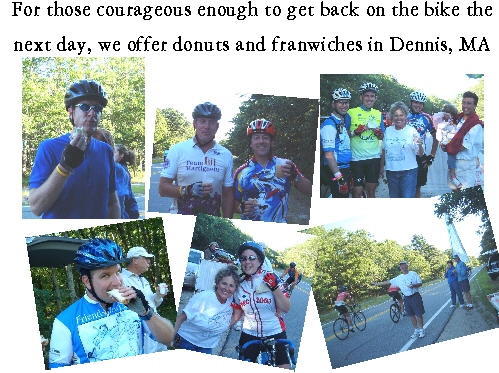
Our awesome volunteers. What a great job they did at Berkley.


Our inspiration!


The cheering section at Berkley.


Lots of Friends and Fun


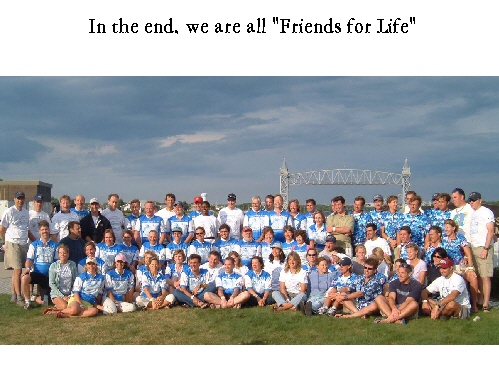
What an awesome team.


THANK YOU ALL FOR BEING A "FRIEND FOR LIFE".

Wednesday, August 03, 2005

Dr. Folkman's Proposal

March 22, 2005

Dr. Michael Dodd
Co-founder
Friends for Life


Dear Dr. Dodd:

I enclose a brief summary of a plan for a sponsored post-doctoral fellowship dedicated to researching the possibility of diagnosing and treating
recurrent neuroblastoma before it becomes symptomatic and before it can be anatomically located by conventional methods.

I. Background.

a) Platelet uptake of angiogenesis regulatory proteins produced by tumors.

We have recently discovered that circulating platelets carry about 30 proteins that regulate angiogenesis. More than half of these proteins stimulate angiogenesis and the others inhibit it. These proteins include for example, the angiogenesis stimulators VEGF and bFGF and the angiogenesis inhibitors endostatin and angiostatin, among others.

We have further found that human cancers secrete these same angiogenesis regulatory proteins, which are then selectively taken up by platelets and sequestered. We have developed a rapid analytical method that quantifies these proteins in the platelet lysate from less than a milliliter of blood. We are therefore able to “read” the profile of angiogenesis regulatory proteins in a sample of platelets and this reflects precisely the output of angiogenic proteins from a tumor.

We have found the same profile of angiogenesis regulatory proteins, or the “platelet angiogenesis proteome” (as we now call it), in human platelets from normal volunteers.

What has been most surprising is that analysis of the platelet angiogenesis proteome can detect human cancers (breast cancer, colon cancer, liposarcoma, glioblastoma, etc.), when they are still non-angiogenic and at a microscopic size of less than a millimeter (pinhead size) in a mouse. All of the angiogenesis regulatory proteins secreted by such a tiny tumor are taken up by platelets and continue to increase their concentration or stay at a high concentration in the platelets as long as the tumor is present. None of the angiogenesis regulatory proteins secreted by early tiny tumors are found in the plasma.

A predictable percentage of non-angiogenic human tumors eventually switch to the angiogenic phenotype at a predictable time. For example, human liposarcoma becomes angiogenic at approximately a median of 133 days ± 2 to 3 weeks. Human osteosarcoma does not become angiogenic until after more than a year. Once a tumor has become angiogenic it grows rapidly and can metastasize. Furthermore, after a tumor has grown to approximately 1 cm3 platelets become saturated with angiogenesis regulatory proteins and these proteins begin to spill into the plasma.

References: Achilles et al (Folkman) J Nat’l Cancer Institute 2001, 93:1075.
Udagawa et al, (Folkman) FASEB Journal, 2002, 16:1631.
Klement et al (Folkman) Blood 2004 (November), 104:239a
(Abstract 839).

b) Detection of metalloproteinases in urine.

In the Vascular Biology Program which I direct, Marsha Moses, PhD., (Associate Professor), and her post-doctoral fellows have found that during the onset of angiogenesis in human tumors, specific enzymes, called metalloproteinases are elaborated by the new blood vessels growing toward a tiny tumor. These enzymes are produced by the cells that make up the blood vessels (called endothelial cells), to facilitate the elongation of new blood vessel sprouts through tissues toward a tumor colony.

Dr. Moses has also found that these metalloproteinases spill into the urine soon after a tumor has become angiogenic. In contrast, in the absence of cancer, these proteins are not usually found in the urine. Marsha Moses’ laboratory has analyzed the urine of 5000 patients and has reported the detection of very early recurrences of breast cancer and prostate cancer, before these tumors are detectable by conventional methods such as magnetic resonance imaging or mammogram.

Reference: Roy et al. (Moses) J Biol Chem 2004; 279:51323.

II. Proposed Experimental Plan:

a) Animal studies.

We will obtain specimens of human neuroblastoma from the operating room and from the American Tissue Culture Collection. We will separate and clone non-angiogenic and angiogenic tumor cells and both will be implanted into immunodeficient mice. We will transfect tumor cells with green fluorescent protein so that we can see them at a size of approximately 0.1 millimeter (100 microns). We will then follow the course of these tumors with our two most sensitive and specific “forecasting” biomarkers: (i) the platelet angiogenesis proteome, and (ii) urinary metalloproteinase.

We expect to be able to detect human neuroblastoma in these mice many months before it could be detected by any other conventional method. This would be equivalent to detecting a recurrent neuroblastoma in a human, one or two years before any conventional method could detect it, and long before any symptoms would appear.

We will use the positive biomarkers to guide antiangiogenic therapy with non-toxic angiogenesis inhibitors, . . . until the platelet angiogenesis proteome and the urinary metalloproteinase tests return to normal levels.

In the mice we will carry out preclinical studies using FDA approved angiogenesis inhibitors that have proven to be safe in thousands of patients. These will include doxycycline, zolendronate (Zometa), rosiglitazone (Avandia), very low doses of interferon alpha, and possibly Avastin. These angiogenesis inhibitors will not all be used together. Instead we will start with a single agent, such as doxycycline and later add one or two other angiogenesis inhibitors until the platelet and urine tests become normal. We already have experience with this regimen in at least 5 patients.

Alternatively, we could use Mark Kieran’s 4-drug metronomic regimen which has been underway at the Dana Farber Cancer Center in Children with brain tumors. It has had very good results in the first few children with recurrent neuroblastoma in Europe.

Based on preliminary data we expect that the blood and urine tests may return to normal after 2-3 months of treatment. Visualization of the tiniest tumors by bioluminescence (green fluorescent protein or luciferase) may reveal that they have become dormant or have disappeared.

b) Human clinical trials.

In parallel with the animal studies we may begin to validate the platelet angiogenesis proteome biomarker and the urinary metalloproteinase biomarker (in collaboration with Marsha Moses), in children with the potential for recurrent neuroblastoma. If we collect an ounce of urine every 2-3 months and less than a milliliter of blood any time that a patient has blood drawn for other tests, we may learn if it is possible to detect a recurrent neuroblastoma months, or more than a year before conventional methods can make this diagnosis.

If early detection is possible, then it may be feasible to employ non-toxic angiogenesis inhibitors guided by these biomarkers, without waiting for the recurrent tumor to be located anatomically. In other words, our goal would be to treat an early recurrence of neuroblastoma before waiting to “see” it, analogous to the way that cardiologists treat with Lipitor guided by lipid biomarkers in the blood to prevent a heart attack years in advance.

III. Post-doctoral Fellowship:

I would plan to do this study with a post-doctoral fellow who is an M.D., Ph.D. (tentatively Akash Patnaik) who is coming from the Mayo Clinic. We would also enlist the help of Susan Connors, who is our data manager for the angiogenesis inhibitor trials at the Dana Farber Cancer Institute.

I greatly appreciate your offer to help support our efforts. I would be happy to discuss this with.


Sincerely yours,


Judah Folkman, M.D.

JF/wpf

cc: Marsha Moses, Ph.D.
Ms. Susan Connors
Mrs. Bonnie Brodowski
Ms. Joan Romanition

Wednesday, June 29, 2005

Join us and cheer on the PMC team in Berkley

On Saturday August 6th 2005, over 125 PMC riders will be pedaling to raise money for neuroblastoma research at Dana Farber. We have organized a special rest stop in Berkley, MA along the 90 miles trek. Come and cheer them on. Here are the details.

Friends for Life Rest Stop

This year, the Friends for Life are organizing a cheering section, mid-ride party. In the past we have set up a tent at the Lakeville waterstop. This year, we have reserved the Lion’s club in Berkley.


The club is located on the Berkley common, which is the triangle in the center of the above map.

For PMC riders, it is less than 10 miles after the Dighton lunch stop.

It comes equipped with a small kitchen, “real bathrooms”, a playground for the kids, nice shade trees for the cheering section and an indoor hall in case of rain!

We have a team of volunteers that will make it the “Best” and most desirable place to stop to meet your family and friends along the route and have lunch and a rest before moving on to Bourne. We encourage team riders to shorten or skip the Dighton lunch stop in order to spend time at the team stop with the friends and family and children that bring us all together to ride for this cause.

There will be plenty of food and drinks for all with the “Franwich” making a come back by popular demand. There will be lots of interesting things to do for the kids while they wait for the riders (playground, games, music, face painting, crafts, magic, lemonade stand. etc). Best of all there will be plenty of Friends to enjoy the day with.

If you or your friends and family want to help with set up please contact Gail Riley at 781-910-6972 or gyriley@comcast.net. Also contact Gail if you would like to provide food and/or drink at the stop. We will need baked goods, treats, fruit, drinks – anything you think tired bikers would like.

We expect that most riders will be at the stop between 11:00am and 2pm.

Please help us get the word out to everyone who would like to come and cheer on the team. Tell all your friends to come meet the kids we pedal for and their families. People should bring chairs and/or blankets to sit on. There are a number of trees and plenty of shade for people to just relax and enjoy the event.

Driving directions:

Take Route 128 or I-495 to Route 24 south.
Take exit 11. Padelford St, Berkley, Dighton.
Turn right (west) onto Padelford St.
Proceed one mile until you come to Locust St.
After you go straight across Locust St, the common and Friends For Life waterstop will be on your right. There is parking around the Old Town Hall building as well as near the playground.

Berkley is 40 miles south of Boston.

Any online map search for “Berkley, MA” will bring you right to the town common.
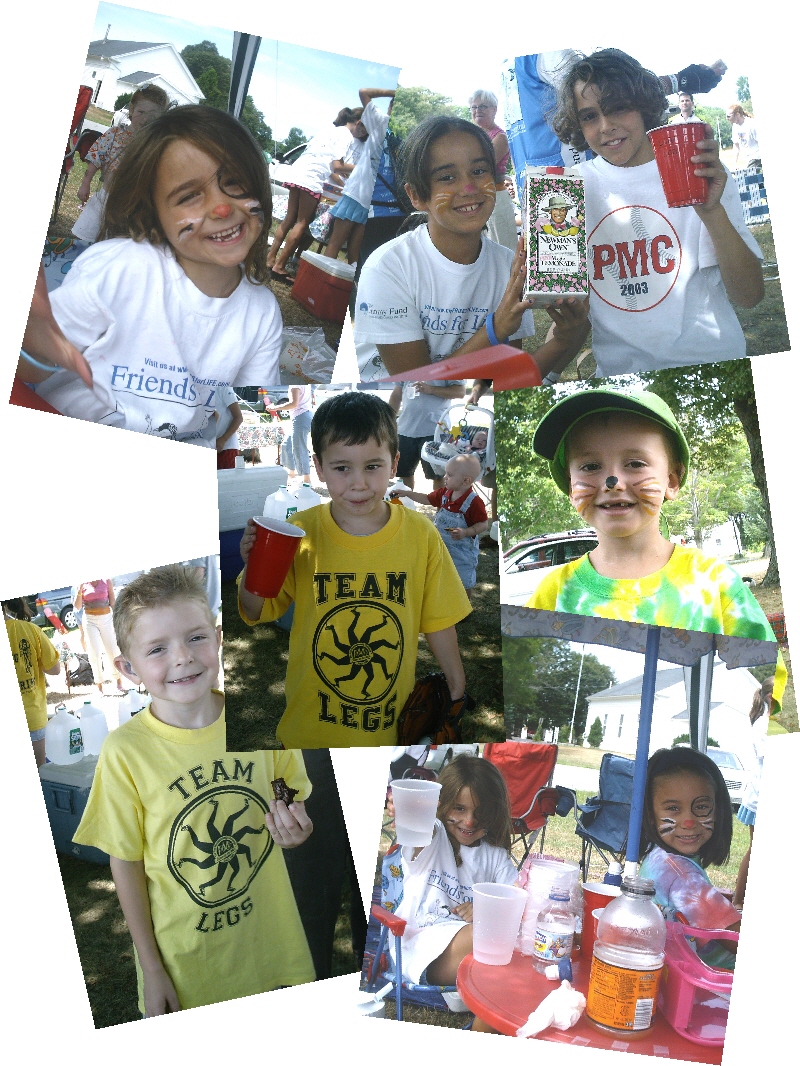
On sunday August 7th, we will be cheering on the riders that will continue on to P-town. Please join us on Setucket Road in Dennis at the intersection of Mayfair Road at 7AM.

Saturday, April 23, 2005

Join the "Friends for Life" walk team

On September 18th, 2005 we will once again lace up our walking shoes
and gather as the "Friends for Life" walk team in the 2005
Boston Marathon Jimmy Fund Walk (aka the Hero Walk).

This year we hope to raise another $90,000 and grow the "Friends for Life" team to over 100 walkers.

All the money we raise as a team will be directed to the "Friends for Life"
neuroblastoma endowed fellowship (PD5100) at Dana Farber. This fellowship helps to support full time researchers at Dana Farber to find more effective treatments and relapse protocol for neuroblastoma, a deadly childhood cancer.

Neuroblastoma is a solid tumor, which arises either in the sympathetic nervous system or closely associated adrenal glands and is usually, although not always located in the abdomen. It ususally strikes children under the age of 2. Because the symptoms of the disease tend to be varied and vague, some 65% of neuroblastomas are not diagnosed until the disease is widespread. Despite intensive courses of chemotherapy, radiation, surgery and stem cell transplant and often initial success in treating the disease, it often relapses, making this one of the most lethal of all childhood cancers. Walking together we intend to change these terrible facts.


Choose the route that works for you and come walk with us. Be a Hero.

Join us for the full marathon -- 26 miles if you dare...
The 1/2 marathon -- 13 miles from Wellesley.
Or do the family walk -- 3 miles starting at the Jimmy Fund and ending
in Copley Square.

Click here to goto the Jimmy Fund Walk site and register to walk with the "Friends for Life" team.

If you can't walk please consider making a donation to our team by clicking here.

For more information about the "Friends for Life" walk team please email
the team captain, Denyse Dodd at denysed@myfriendsforlife.com

Wednesday, March 02, 2005

Join the "Friends for Life" PMC team

In 2004, 102 friends pedaled their bikes in the Pan Mass Challenge (PMC) -- a bike-a-thon across Massachusetts that raises money for Dana Farber Cancer Institute -- and raised over $520,000.00 to support neuroblastoma cancer research.

Neuroblastoma is a solid tumor, which arises either in the sympathetic nervous system or closely associated adrenal glands and is usually, although not always located in the abdomen. It ususally strikes children under the age of 2. Because the symptoms of the disease tend to be varied and vague, some 65% of neuroblastomas are not diagnosed until the disease is widespread. Despite intensive courses of chemotherapy, radiation, surgery and stem cell transplant and often initial success in treating the disease, it often relapses, making this one of the most lethal of all childhood cancers. Working together we intend to change these terrible facts.


Several families and friends whose children are afflicted with Neuroblastoma have joined forces to establish the "Friends for Life" Neuroblastoma Endowed Fellowdhip at Dana-Farber (account PD5100). This fellowship enables Dana Farber to hire researchers, for perpetuity, working hard to find more effective treatments and relapse protocol and to help eradicate this aggresive pediatric cancer. We hope

We have created a PMC team named "Friends for Life". All the proceeds of the team is directed into the "Friends for Life" Neuroblastoma Endowed Fellowship (account PD5100)at Dana Farber.

Please join us, and ride the 2005 PMC as a "Friend for Life".


To join the "Friends for Life" team send an email to the team captain, Bruce Greer, with your PMC Egift ID. bgreer@myfriendsforlife.com
If you have not yet registered for the 2005 PMC, go to
www.pmc.org. Upon registration, you will be given an Egift ID.

Or if you want to direct your PMC fundraising without joining the team contact Denyse Dodd at 617-872-6020 or email her at denysed@myfriendsforlife.com

As a member of the "Friends for Life" team you will receive a free custom riding jersey. Check it out in our giftshop www.myfriendsforlife.com/giftshop.html
100% of the money raised will go directly to Dana Farber and help to fund the cure that is needed to save our children.


Check out the photo album from the 2004 PMC. We had a blast!
THANKS FOR BEING A FRIEND FOR LIFE

Tuesday, March 01, 2005

Looking for runners.... for the 1/2 B.A.A Marathon on October 9th, 2005

The B.A.A. Half Marathon presented by Dana-Farber Cancer Institute and the Jimmy Fund
is taking place on Sunday, October 9, 2005 -- Park Drive, Back Bay Fens, Boston.

The "Friends for Life" is currently building a team of runners to particiapte in the event and help raise money to benefit the "Friends for Life" neuroblastoma endowed fellowship at Dana Farber (PD5100).

Each runner is responsible for raising a mininum of $500 and the team as a whole most raise at least $10,000 for the funds to be restricted to the PD5100 account.

Send email to denysed@myfriendsforlife.com if you want to run and help the kids.

Thursday, October 28, 2004

Dodd family nears $1 million goal for cancer research

Dodd family nears $1 million goal for cancer research
By Craig Salters/ csalters@cnc.com
Thursday, October 28, 2004

If a cure for cancer is the million-dollar question, the Dodd family is
working hard to find the answer.

Michael and Denyse Dodd, proud parents of 10-year-old Oliver and
four-year-old Isabelle, made a commitment on Valentine's Day 2003
to raise $1 million over a five-year period for the Jimmy Fund/Dana
Farber Cancer Institute. When that goal is achieved - and they've
already raised more than $900,000 - Dana Farber will hire a full-time
research scientist in perpetuity to solve the riddle of neuroblastoma,
an aggressive solid tumor cancer that exclusively afflicts children
between the ages of one and two as it did Isabelle, who is now in
remission and content to run around the Dodds' summer cottage in
the Follins Pond area of South Dennis.

"It's an endowment, so it will live forever or until a
cure is found," says Michael, who grew up on Pleasant Street in
South Yarmouth and met Denyse, who grew up on Yarmouth's Long Pond Drive,
while the two were students at Dennis-Yarmouth Regional High School.
The family now lives in Needham.

To raise the needed funds, the Dodds created Friends For Life,
an informal but effective organization that taps the generosity of
family and friends as well as more than 60 other families affected by
neuroblastoma, a cancer that afflicts roughly 600 children per year
in the United States and is the number one killer of children under
the age of five.

"We couldn't have done this alone," says Denyse,
who is putting together a guest list for a thank-you party that
already has more than 500 names. "It's because of all the people
who joined hands on this, who believed and helped, that we're
going to make it."


One such helper was Michael's cousin Paul Brown, who put
together an original team of 16 "pedal partners" and raised a
significant amount of money during the Pan Mass Challenge,
a biking fund-raiser for The Jimmy Fund. The Friends For Life team currently has more than 100 riders.

Still others joined different events, including a
half-marathon and a 26-mile walk sponsored by the Jimmy Fund.
Others sponsored dances,ran silent auctions, knit scarves and
did whatever they could to make the Dodds' ambitious goal a reality.
Two of the more original fund-raising ideas, which can be found
in the gift shop of the group's Web site, myfriendsforlife.com
(the Dodds used "my" in the address because Friends For Life already
had been taken), include a silver Friends For Life bracelet
donated by a local artisan and "Oliver's Story:
For Siblings of Kids With Cancer," a children's book written and
illustrated by Michael through the eyes of Isabelle's big brother.
Oliver is scheduled to read from his book in December during a
tree lighting ceremony at Post Office Pavilion in Washington, D.C.

Locally, 20 percent of the $325,000 in funds raised from the
Joe Cronin Fishing Tournament was recently donated to the
Friends For Life Neuroblastoma Endowment Fellowship

as will 100 percent of the funds raised during the upcoming
Bass River Doors for Charity contest in December.

Denyse got the idea for the $1 million restricted account
after talking with Dr. Lisa Diller at Dana Farber, who was talking
hypothetically about what such funding could do in the fight
against neuroblastoma, which has seen less research dollars than
those devoted to battling the various forms of leukemia.

"I said, 'Well, what would you do with $1 million?" says
Denyse, who adds the overall goal is to make sure that other families do
not have to go through the ordeal of treatments faced by the Dodds and
others.


Michael adds that, although Friends For Life is close to
reaching its $1 million goal, any additional funds raised also
will be used exclusively for research. In other words, the Dodds
have no intention of stopping their fight.

"If we can get one researcher, then we can get two,
or a research assistant," says Michael, noting that, in 1996,
only one in 10 children diagnosed with the disease survived
more than five years. Today, he says, survival rates are
closer to six in 10, compared with 80 to 90 percent survival
rates for childhood leukemia.


The Dodds hope the money they raise will be used as seed
money to eventually create a center of excellence at Dana Farber,
helping to make the end of childhood cancer that much closer.

"We're trying to get the resources up to speed,"
says Michael. "If more resources were dedicated, we could get there."


The Dodds say those wishing to help can do so in a number of ways,
from visiting their frequently updated Web site to joining the
friends in their activities.

"You can walk with us, run with us, bike with us or knit
with us," says Denyse. "We're open to anyone."


Local donations also can be made by sending a check to Friends or
Life, care of Kathy O'Neil, 128 Pleasant St., South Yarmouth, 02664.

The Dodds thank those who already have participated for giving
them "a circle of families" with which to make a difference.

"It seemed like an unrealistic goal at first but, when all the other
families who've been touched by this disease started coming together,
it became possible," says Denyse.


Published in the Register October 28, 2004
http://www2.townonline.com/barnstable/localRegional/view.bg?articleid=115553

Wednesday, October 13, 2004

Dr. Suzanne Shusterman is named first Friends for Life Fellow


Suzanne Shusterman,MD, has joined the Department
of Pediatric Oncology as the Institute’s first
Friends for Life fellow, a position that supports
a full-time researcher in neuroblastoma, a nerve
tissue malignancy that is the most common cancer in infants.

The endowed fellowship was established early last year
by Michael and Denyse Dodd after their daughter,
Isabelle, was treated for neuroblastoma at Dana-Farber
in 2001–02.

In launching the initiative, the Dodds pledged to raise
$1 million over five years to underwrite the faculty
researcher position. Gifts from around the country –
many in honor and memory of other children diagnosed with
neuroblastoma – and the efforts of dozens of participants in the
Boston Marathon® Jimmy Fund Walk, Pan-Massachusetts Challenge
bike-a-thon, charity golf tournaments, and other events have
helped drive the fellowship toward its goal.

Shusterman comes to DFCI from Children’s Hospital of Philadelphia,
where she specialized in neuroblastoma research. At the Institute,
she will continue that work, leading clinical trials of new treatments
for the disease.

"Thanks to the dedication of the Dodds and the Friends for Life
walkers, bikers, bowlers, and others, we will be able to expand
our clinical research program in neuroblastoma and bring new
laboratory developments to clinical trials more efficiently,"
says Lisa Diller, MD, of Pediatric Oncology.


“Dr.Shusterman will be writing and conducting early-phase
clinical trials of new agents, and we are thrilled to have her.”


Published in Dana-Farber "Inside the Institute" October 13th, 2004.
at http://www.danafarber.com/images/pdfs/iti/10-13-2004.pdf
or at http://myfriendsforlife.com/temp/ITI10-13-2004.pdf

Sunday, August 15, 2004

PMC pictures for 2004

Pictures from the Weekend.
Send me yours and I will include them.


THANK YOU ALL FOR HELPING MAKE A DREAM COME TRUE.


CLick here to see my photo album

Thursday, August 05, 2004

Riding for Life

Riding for life
By Dave McAuley/ Times Sports Correspondent
Wednesday, August 4, 2004

Denyse Dodd remembers the day well.

The Needham mother of two stood on the 2002 Pan-Massachusetts
Challenge route in disbelief: "I remember thinking, 'Oh my goodness,
how can they bike in this hot weather'?"

But shock wasn't the only emotion enveloping Dodd that day.
As she stood near the hundreds of bikers, her mind fluttered
with images of her daughter Isabelle, who had been diagnosed
with neuroblastoma, a rare cancer that afflicts young children.
Her "beautiful girl," whose delicate life hung in the balance
daily, was only 19 months at the time of diagnosis in July 2001.

And suddenly Dodd found the answer to her question. She flashed
back to the restless hours in the waiting room, where she sat as her
daughter underwent 15 days of radiation, five rounds of chemotherapy
and a stem-cell transplant.

Now it was clear. Humidity and heat be damned. These riders had
lives to save.

"These riders were an important part of the recovery,"
Dodd said. "They raised money for cancer research and gave
us a way to move forward in our lives in a positive way.
I remember telling myself that if Isabelle was OK,
I would ride it the next year."


And she did.

Dodd is now set to ride for the second consecutive summer in this
year's 25th annual PMC, set to begin Aug. 6. The 42-year-old will be
riding along with her husband, Michael, and her Friends for Life
team, which is composed of more than 100 riders and has raised
$700,000 for neuroblastoma research.

According to its Web site, the PMC is composed of six different
bicycle routes, which vary in length from 89 miles to 192 miles.
Through 46 towns, nearly 4,000 cyclists from 40 U.S. states pedal
from Sturbridge to Provincetown. To date, the PMC has raised $102
million for life-saving cancer research.

Oh, and by the way, little 4-year-old Isabelle is on the
road to recovery.

Along with Isabelle, Dodd's 9-year-old son Oliver is another
source of inspiration. At every race, Oliver headlines the
Friends for Life cheering section in Lakeville with
his lemonade stand.

"Before Isabelle was diagnosed, I supported the PMC,
but it wasn't as present in my life as it is now," said Dodd,
who, along with Isabelle, was part of the pedal-partner program
in 2002, where riders are matched with cancer patients.
"I live with the uncertainty of relapse today and, in most cases,
the odds of full recovery aren't great. That's one thing that
keeps me pedaling."


"People cheer you along the way," said Dodd, who moved to
Needham eight years ago from Dedham. "My friends and family have been
awesome. Friends for Life wouldn't be where it is today
without all those people and the donations. It blows me over.
There are definitely more good guys than bad guys in this world."


Dodd also wouldn't be able to compete without her extensive
training. To train for the Wellesley-to-Bourne route (84 miles)
she rides, Dodd and her husband pedal 40 or 50 miles on the
weekend, along with shorter rides during the week.

Despite this extensive conditioning, Dodd still finds there
are times when she tires during the PMC. That's when she digs deep
- and remembers Isabelle.

"I think of my daughter and all the kids we've met
along the way," said Dodd, who wants to raise the
Friends for Life donation total to $1 million by
the end of this summer. If you look at Isabelle today,
you would never know what she's been through.
And when those thoughts come, the hills are nothing.
It is great motivation."


And through all the health struggles, prayers and challenges, the
system engineer for Framingham's Computer Associates also has a
newfound appreciation for parenthood.

"As parents, it's our job to advocate for kids," said Dodd, who also
partakes in other various fund-raisers during the year.
"They can't do it for themselves. There are only 600 occurrences
of neuroblastoma everyyear, and it doesn't get as much money
as other disease funds. We want to raise money for better treatment
and relapse protocol. It's my job to tell others about this."


One venue through which Dodd spreads her message is her Web site,
www.myfriendsforlife.com. Donations can be given through the site
by clicking on the giftshop/donation link.

And in the end, the site is another way Dodd shares Isabelle's
inspiration, something she affirmed on that humid day in 2002.

Said Dodd: "I'm always thinking of ways to build the team and raise lots of money. I can't wait to ride."


Published in the Needham Times August 5th, 2004

Riding for a Cure

Riding for a cure
By Mike Spellman/ mspellman@cnc.com Scituate Mariner
Thursday, August 5, 2004

21 Scituate residents to ride in 25th annual Pan-Mass Challenge this weekend.

A total of 21 residents from Scituate will ride in the 25th annual Pan-
Massachusetts Challenge (PMC), the nation's most successful bike-a-thon
for charity, on Aug. 7 and 8.

Alone or in teams, athletes or amateurs, strong or weak, they ride to
accomplish a single, unified goal - a world without cancer.

The Scituate riders are Charlene Richard, Dana Spires, Daniel Rose,
David Pinkham, Deidre King, John King,
Dwight Walker, Frank Gaziano, Jim Harmon, Karen Maguire, Kevin
McCarthy, Liz Shallenberger, Maureen McLaughlin, Nancy Donovan,
Rich Bonanno, Rose Lockwood, Steven Donovan, Steven Nothern,
Thomas Aylesworth, Jay Harmon, Tara Stone.

-

Deidre and John King have had cancer touch their lives in a
profound way, but they say their story is proof positive that undertakings such as the Pan Mass Challenge are working.

The Scituate couple ride specifically to find a cure for Neuroblastoma, a relatively rare form of childhood cancer that was once had a nearly 100 percent fatality rate but today-- largely due to grass root fund raising efforts of groups such as My Friends For Life organization- now has a roughly 50 percent cure rate.

"Our lives have been touched by Neuroblastoma," said John, speaking for Deidre and himself. The parents of three will make the 84-mile Wellesley to Bourne trek.

"When you look at the list of funding provided to help cure various cancers, it's tough to believe how little goes for Neuroblastoma," he continued. "We've had doctors say to us if they spent the same money on this as they did prostate cancer or breast cancer, they'd have probably found a cure for it by now. As a parent, that's a hard thing to hear."


My Friends for Life was started by Denyse and Michael Dodd, who's daughter is a survivor of stage III Neuroblastoma. There will be approximately 100 riders representing this organization in the Pan Mass Ride this weekend, making it the second largest "team" to participate. The organization also raises funds and awareness through the Boston Marathon and Jimmy Fund Walk.

The Dodds made a deal with Dana Farber calling for a permanent full-
time researcher to be hired to find a cure for if My Friends for Life could raise $1,000,000 over a five year period. Through two and half years, the tally stands in excess of $700,000, and Dana Farber has already hired the promised researcher.

"There is no relapse protocol right now," continued John King, who,
combined with Deidre, is raising approximately $30,000 for the cause through the Pan Mass Challenge. "If a child had a relapse right now, there wouldn't even be a plan in place for treating her. That's unacceptable. We're trying to make a difference here, nationwide and, really, worldwide.

Anyone interested in joining in the battle against Neuroblastoma are
urged to go to the Website: www.Myfriendsforlife.com.

It is also not too late for those riding in this Pan Mass Challenge to
have their contributions earmarked specifically to help My Friends For Life Riders.
Anyone interested in doing this simply has to contact the Pan Mass organizers and provide their rider ID number.


Dave Pinkham is making the "big ride"-the two-day, 192-mile trek
from Sturbridge to Provincetown. This is his first PMC and he has been
training with three to five bike rides per week, along with some weight training and elliptical bike riding.


He's riding with a small group that includes three-tiem Pan Mass rider Mike Ryan, of Hingham. "He has been my motivator and consultant," said Pinkham. "Mike lost his father-in-law to cancer.

Andy Kramer, from Medway, is also riding with in this group for the
first time. Tragically, Andy lost his six-year old daughter, Emma, to cancer this past spring. She had a two year fight.

"Andy, being a great father, was continually by her side, comforting her and bringing big smiles to her face during a desperate situation," said
Pinkham. "Andy put all aspects of his life on hold, devoting his entire being to Emma. Words can not describe the love he has for is daughter."


Both of Andy's parents are cancer survivors, as are an uncle and aunt.

"I enjoy bike riding, staying in shape and charitable work," he
explained. "So this event is a good fit for me. Understanding that everything that is accomplished today requires money, lots of money, I
feel it is my duty to participate in this small way for a great cause. I am
thoroughly impressed by the PMC management team and glad to help.

"Not to forget, as I am told, participation in this event is a lot of fun."

Rose Lockwood,44, is likewise making the maximum commitment:
Sturbridge to P-town, or bust.

Rose will ride in her second PMC with her sister-in-law Laura, who is
doing her first PMC, her cousin-in-law Dolly, who is doing her third ride, and Dolly's friend, another veteran PMCer.

Ironically, this friend was diagnosed ho was breast cancer the day
before she made last year's ride. She finished that ride, recently wrapped up her treatment and is taking it all on again.

"Amazing!", states Rose.

Rose's in-laws have a long involvement with Dana Farber. Her
husband David's grandfather was one of the founders of the Jimmy Fund
David's father is an active, long time member of the Board of Trustees.
David's brother's have all run the Boston Marathon to raise funds for
Dana Farber, and David has done the Boston Marathon Jimmy Fund walk
with his son and several of his son's basketball teammates.

David's sister has done the PMC for nine years, personally raising over $30,000.

In 2002, David's mother, Carol Lockwood, was diagnosed with Stage 4
pancreatic cancer. She was given compassionate care at Dana Farber, but
because her illness was uncovered at such an advanced stage, there was
little else that could be done except provide comfort and support. Rose
said she chose to ride last year to honor this terrific presence in my life, and to aid in research efforts so that someday, someone else receiving the same diagnosis will have more hope for their future.

"This means I get to be part of a massive, enthusiastic effort to
expand cancer research," offered Rose when asked about her motivation
for makign The Ride. "It also means I get to experience once again the overwhelming support of the volunteers of the PMC and folks who come out to stand by the side of the road and cheer us on. I can not begin to
tell how wonderful that part was. My knee, the blisters... that's another story."

Despite being a first timer, Thomas Aylesworth , 43, is another rider who's in for the 192-mile trek.

He's trained for the last three months, ridign four or five times per
week and gradually increasing his miles. In July, he averaged
approximately 150 miles per week of pedaling.


Aylesworth is riding with friend Steve Brake, a fellow attorney from
the firm of Nutter, McClennen & Fish in a group of eight that calls
itself "Mellow Velo."

Aylesworth, who has lost friends and family to cancer, said he
simply "could not stand on the sidelines any longer in the war against cancer. I can't find a cure but I can ride a bike.

"I believe the PMC will be more than a long bike ride -- for me, it will
be a celebration of the lives and spirits of people I have known who lost
their cancer battles and others who are cancer survivors."

-

Nearly 4,000 cyclists from 40 states and six countries will ride in the PMC to raise $17 million, bringing the total contributed to Dana-Farber
Cancer Institute through its Jimmy Fund to more than $120 million. The
PMC's annual contribution funds lifesaving cancer research and care for
cancer patients around the globe. More than 160 PMC participants are cancer survivors or current patients, while others ride in honor of a friend or family member fighting the disease.

"Unfortunately, everyone has a connection to cancer in some way," says Billy Starr, PMC founder and executive director. "The PMC gives people a way to channel thankfulness for effective treatment or grief over lost loved ones into positive energy that helps others."

Since its inception in 1980, the PMC has become the most efficient
athletic fundraising event in the country, donating 93 cents of every dollar
to the Jimmy Fund. Cyclists are required to raise between $1,750 and $2,750 to ride, depending on the chosen route. The average cyclist raises $4,300.

The PMC, presented by the Boston Red Sox, offers six different
routes, traveling through 46 Massachusetts towns over one or two days,
covering between 89 and 192 miles. Two-day rides include the original
192-mile Sturbridge-to-Provincetown route; 186-mile Sturbridge-Bourne-
Wellesley route; 169-mile Wellesley-Bourne-Provincetown route. One-day riders choose between the 108-mile Sturbridge-Bourne route and the 89-mile Wellesley-Bourne route.

To become a volunteer, a virtual rider, or make a financial
contribution to a rider from your town, visit www.pmc.org or call (800) WE-
CYCLE. Checks can be made payable to PMC, 77 Fourth Ave., Needham, MA 02494.


I wish to thank all of the riders of the Pan Mass Challenge who've
taken the time to honor my request and tell the stories of their motivation
for making this ride. Inspiring stuff, to be sure. In fact, the response has
been so overwhelming, I simply did not have room to include information
from all of these reports I've received (45 and counting at the time of this writing).

I promise to get to them all next week, though.

Mike Spellman

Monday, August 02, 2004

Revivio employees to particiapte in PMC

REVIVIO EMPLOYEES TO PARTICIPATE IN PAN–MASSACHUSETTS
CHALLENGE TO RAISE MONEY FOR CANCER RESEARCH AND TREATMENT


Lexington, MA – August 2, 2004 – On August 7 and 8, Revivio, Inc.
employees will join with nearly 4,000 other cyclists in the
nation’s most successful bike-a-thon, the
PAN-Massachusetts Challenge (PMC), to raise money for
life-saving cancer research and treatment at the Dana-Farber
Cancer Institute through its Jimmy Fund.

The PMC cyclists will travel six different routes, logging
between 89 and 192 miles over one or two days, through 46
scenic Massachusetts towns from Sturbridge and Wellesley
to Bourne and Provincetown. The goal is to raise $17 million,
elevating the PMC’s total Jimmy Fund donation to nearly $120 million.

Bruce Greer, an 11-year PMC cyclist and a principal
software engineer at Revivio is the captain of the PMC’s
Friends for Life Team, which is made up of over 100 riders.
The Friends for Life Team consists of friends and
family of children that have been afflicted with neuroblastoma,
a form of cancer found primarily in very young children.
The current treatment for neuroblastoma is a protocol that lasts
close to a year and generally includes surgery, chemotherapy,
radiation treatment and stem cell transplants.

“It is extraordinarily difficult to endure this as an adult, let
alone to be subjected to it all before your second birthday,” Greer
said. “During past rides when I thought I was losing steam,
I just thought about everything these kids and their families
have to go through and the tireless work of the Jimmy Fund,
and it really has given me the strength to ride on."


Added Greer, “I have been overwhelmed by the personal support and
financial generosity I have received from both Revivio as a corporation,
as well as its employees individually".


PMC Founder and Executive Director Billy Starr says Greer’s
dedication,and that of the thousands of PMC cyclists, is what
enables the PMC to ontribute more money than any other athletic
event in the country and make such a difference for those fighting
cancer around the world.

“The Friends for Life Team is extremely motivated to raise crucial
funds for cancer research. We wish Bruce and the other riders
from Revivio the greatest of luck on their ride,” says Starr.


For further information on the PMC, please visit its Web site at:
www.pmc.org.


To support the Friends for Life team, tax deductible donations
can also be made via the PMC Web site


About Revivio

Revivio, Inc. is the leader in the new field of Continuous Data
Protection (CDP). Revivio’s Continuous Protection System
is a groundbreaking approach to data protection and recovery
that allows companies to restore data instantly, exactly as
it existed at any point in time, and to recover business
applications in just minutes. By allowing enterprises to
restore data instantly to any previous point in time,
Revivio’s Continuous Protection System allows customers to
minimize business risk, reduce costs and improve business
continuity. For additional information, please
call 781-301-0200, email info@revivio.com or visit
the company’s website at www.revivio.com.


###


Revivio is a registered trademark of Revivio, Inc.
All other brand and product names in this announcement
may be trademarks or registered trademarks of their respective holders.

Wednesday, January 28, 2004

Rare cancer drives family to work, and pray

Rare cancer drives family to work, and pray [size=9:62bb5622b9]By Amanda McGregor / Staff Writer Wednesday, January 28, 2004

It is a parent's worst fear.

When Isabelle Dodd was only 19 months old, she was diagnosed with neuroblastoma, a rare pediatric cancer of the sympathetic nervous system. After extensive and aggressive treatment that included the removal of the large neuroblastoma tumor from Isabelle's abdomen, five weeks of in-patient chemotherapy, local and whole-body radiation, and a stem cell transplant, she thankfully went into remission.


Today, Isabelle is an energetic, playful and beautiful 4-year-old. But for
Denyse and Michael Dodd, the fight is not over. Neuroblastoma often relapses, and with no regimen of treatment for relapse, it is one of the most lethal of all childhood cancers. The Dodds are thankful for Isabelle's remission, but anxiously hope each day that she remains healthy.


We live in fear," said Denyse Dodd, tears creeping into her eyes as she stood in the kitchen of her